Saudi Arabia under the initiative of the Crown Prince Mohammed bin Salman gave women in the kingdom the right to drive. Saudi Arabia has been the only country in the world to prohibit women from driving – a universally perceived image of inequality. Alongside with the ability to drive has come new rights and freedoms: the ability to join the military, work in intelligence services and attend sporting events and concerts. A senior cleric even commented that women should not be required to wear the abaya. Saudi Arabia is following some great people’s example. Over the Middle East and North Africa, nations have been updating women’s right. Since 2011, almost every nation in North Africa has adopted a gender quota, in which parties are required to nominate a minimum percentage of women as candidates for office, to increase women’s representation in politics. In Egypt, Tunisia, Iraq, Yemen and Morocco, women can now pass on citizenship to their children, and Lebanon may soon join this list. The region has seen the widespread repeal of laws letting rapists escape punishment if they marry their victims and nine countries adopted laws against domestic violence. The rights to education and employment plus women’s activism make a big difference in women’s rights.
“Feminism isn’t about making women stronger. Women are already strong; it’s about changing the way the world perceives that strength”
– G.D. Anderson
Women and Islam
In Islam, men and women are moral equals in God’s sight and are expected to fulfil the same duties of worship, prayer, faith, almsgiving, fasting, and pilgrimage to Mecca. Islam by and large improved the status of ladies contrasted with before Arab societies, restricting female child murder and perceiving ladies’ full personhood. Islamic law stresses the authoritative idea of marriage, necessitating that a dowry is paid to the woman and not her family, and ensuring women’s rights of inheritance and to claim and oversee the property. Women were additionally allowed the option to live in the marital home and get monetary maintenance during marriage and a holding up period following demise and separation.
Historical records show that Muhammad counselled ladies and gauged their opinions seriously. Umm Waraqah was selected imam over the family unit by Muhammad. Women contributed altogether to the canonization of the Quran. A lady is known to have adjusted the definitive decision of Caliph Umar on the endowment. Women prayed in mosques unsegregated from men, were involved in hadith transmission, gave sanctuary to men, engaged in commercial transactions were encouraged to seek knowledge, and were both instructors and pupils in the early Islamic period. Muhammad’s last wife, Aishah, was a well-known authority in medicine, history, and rhetoric. Caliph Umar named ladies to fill in as authorities in the market of Medina. Life stories of recognized ladies, particularly in Muhammad’s family unit, show that ladies acted moderately independently in early Islam. In Sufi circles, ladies were perceived as educators, followers, “otherworldly moms,” and even inheritors of the profound privileged insights of their fathers.
No woman held religious titles in Islam, but many women held political power, some jointly with their husbands, others independently. The best-known women rulers in the premodern era include Khayzuran, who governed the Muslim Empire under three Abbasid caliphs in the eighth century; Malika Asma bint Shihab al-Sulayhiyya and Malika Arwa bint Ahmad al-Sulayhiyya, who both held power in Yemen in the eleventh century; Sitt al-Mulk, a Fatimid queen of Egypt in the eleventh century; the Berber queen Zaynab al-Nafzawiyah (r. 1061 – 1107 ); two thirteenth-century Mamluk queens, Shajar al-Durr in Cairo and Radiyyah in Delhi; six Mongol queens, including Kutlugh Khatun (thirteenth century) and her daughter Padishah Khatun of the Kutlugh-Khanid dynasty; the fifteenth-century Andalusian queen Aishah al-Hurra, known by the Spaniards as Sultana Madre de Boabdil; Sayyida al-Hurra, governor of Tetouán in Morocco (r. 1510 – 1542 ); and four seventeenth-century Indonesian queens.
Nevertheless, the status of women in premodern Islam all in all adjusted not to Quranic beliefs however to prevailing patriarchal cultural norms. Thus, improvement of the status of ladies turned into a significant issue in the present day, reformist Islam.
The rights to education and employment plus women’s activism make a big difference in women’s rights.
In “Myths About Women’s Rights: How, Where and Why Rights Advance,” Feryal Cherif, analyses two hypotheses for why cultures advance gender equality.
The first is the thing that we call “centre rights”: that women’s rights to education and employment are the structure hinders with which to begin political organizing for equality, developing a group sense of fairness (or the lack thereof), and building public support for women’s equal socioeconomic standing. This gives government officials, and other residential elites motivations to help ladies’ privileges.
The subsequent hypothesis is that ladies’ privileges backing cultivates change as local and worldwide activists advance new standards of uniformity by publicizing countries’ practices — both those that treat ladies similarly and those that slack — and constraining governments to adjust to worldwide norms. Research shows that these hypotheses are steady with the ongoing advances in gender equality in Saudi Arabia and the region at large. Looking at ladies’ property rights in 41 Muslim-larger part nations, I believe that women are probably going to appreciate safer property rights in nations where, first, women have more prominent admittance to education and second, where there are thick systems of women rights activists. Where ladies are more mindful of their privileges, better situated to challenge male family, and have the socioeconomic power to hold politicians accountable, their property rights are stronger. That is valid also for the Saudi Arabian development of women’s rights, including the right to drive. It is presumably not a happenstance that, throughout the long term, the hole between Saudi Arabian boys’ and girls’ education has considerably limited. Furthermore, it’s actually in numerous other Middle Eastern and North African (MENA) nations, where young ladies beat young men in school and enrol in universities at higher rates than boys. Besides, an expanding number of Arab ladies have joined the work power — though not yet at levels as high as worldwide midpoints. Indeed, even in Saudi Arabia, with its extraordinary forms of gender segregation, ladies are working in an ever-increasing number of fields. Also, with the right to drive, more women will be able to seek employment.
In addition to core rights, women rights activism has additionally considerably expanded in the Middle East and North Africa in the previous decades. During 1980 and 2015, the number of women rights groups operating in the region nearly tripled. Some scholars and reporters have argued that advocacy campaigns and global pressure have helped push MENA nations toward gender equality.
Indeed, even in conservative states like Saudi Arabia, the government may think that it’s hard to contain women’s expectations once they’ve been educated and entered the work power — even while more traditionalist pieces of their country push back.
Political Participation

Political revolutions and instability in the Middle East have mobilized women in new ways. Despite political turmoil and express dangers to their privileges, numerous ladies are expanding their activism to make their voices heard. Because of this flood of political commitment from ladies, however, fundamentalist and traditionalist pioneers and governments are pushing back, increasing their assaults on women’s human rights with an end goal to keep up their power.
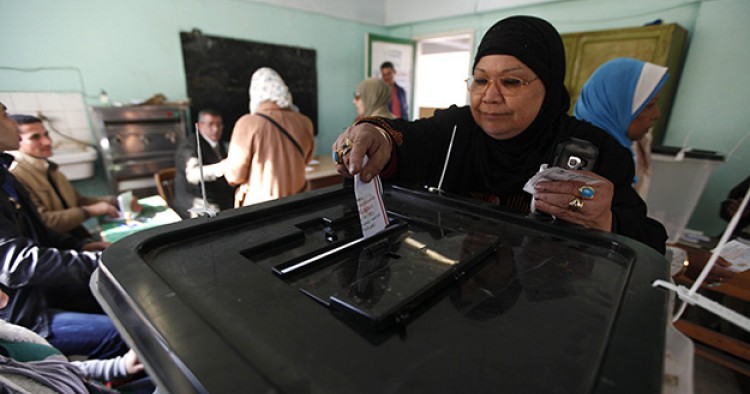
Even though, when women do win rights, they aren’t able to execute them since they are sabotaged by solid accepted practices and conventions. For instance, although women in Egypt have cast ballot rights, the Egyptian Association for Community Participation Enhancement (which conducts customary political race checking) has discovered that in provincial towns, spouses, fathers, or siblings will advise women how to cast a ballot—or even just take a women’s polling form from her and round it out however they see fit.
Laws in the area, including both old laws and ongoing ones, confine ladies’ common freedoms and fill in as unequivocal proof that people with significant influence don’t consider women equals. For instance, in 2014 the Iraqi parliament introduced a draft law that endeavoured to make it lawful to wed a young girl as young as nine years of age, granting conjugal assault, and allowing polygamy. A long-standing law in Lebanon doesn’t permit women to pass on their citizenship, implying that if a Lebanese lady weds a non-Lebanese man, her children wouldn’t have Lebanese citizenship. Also, fundamentalist gatherings are a ground-breaking and developing danger, with systems that straightforwardly target women, including the abduction and forced sexual slavery of Yazidi ladies in Iraq by the alleged Islamic State gathering (ISIS). With so many powerful forces opposing women’s human rights in the Middle East, many in the region feel that international support has been far too weak. Leaders of women’s groups across the region stress the need for international support and solidarity. Past budgetary help, women likewise call for worldwide solidarity and expressions of help, referring to the two sorts of help as basic to opposing fundamentalism. Women’s gatherings keep up that while fundamentalist dangers against women’s rights are at the moment most powerful in the Middle East, the issue is, in fact, a global problem.